June 26, 2026
Why Toronto’s $1.5B Development Charges Reduction Won’t Help Most Multiplex Investors
Toronto just secured $1.5 billion to reduce development charges by 40 to 60 percent. That’s the kind of headline that makes investors sit up. Who doesn’t love lower fees, lower costs, and better returns? But here’s the part the headlines are skipping. This announcement probably doesn’t change your costs at all.
Here’s why, and who the $1.5 billion actually helps.
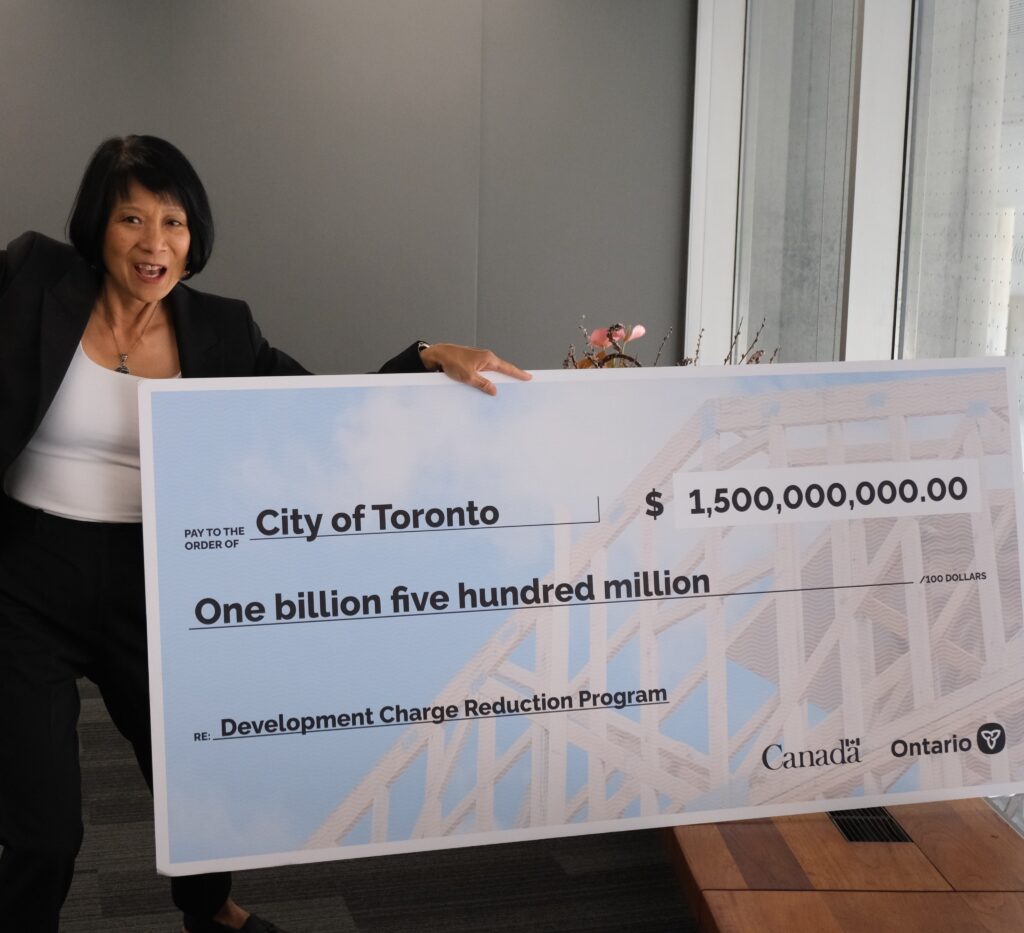
What Toronto Actually Announced
In June 2026, the City of Toronto confirmed a $1.5 billion partnership with the federal and provincial governments under the Canada-Ontario Partnership to Build. The funding is designed to backfill the revenue the City currently collects through development charges (DCs), the per-unit fees builders pay to fund roads, transit, water, and sewer infrastructure.
With that funding in place, Toronto says it will be able to reduce DCs by 40 to 60 percent between 2026 and 2029, depending on unit type. Which is well beyond the 30 to 50 percent the funding program required.
The Problem: Multiplexes Up to Six Units Already Pay $0
Here’s why the announcement is less significant to multiplex investors than the headlines make it seem. Toronto has steadily been removing development charges from small-scale housing for years. All units up to a fourplex have been exempt from development charges since 2022. In 2025, the City expanded that exemption to cover all units up to a sixplex.
In other words, if you’re building a duplex, triplex, fourplex, fiveplex, sixplex, garden suite, or laneway suite in Toronto today, your development charges are already $0, and have been for a while*. The 40 to 60 percent reduction announced as part of this $1.5 billion deal applies to the standard DC rate schedule, the one that kicks in for projects that fall outside that small-scale exemption.
A 40 to 60 percent discount on a fee you weren’t paying in the first place isn’t a discount.
So Who Does the Reduction Actually Help?
The reduction applies to the standard non-rental DC rates, which currently sit at roughly:
- $52,676 per unit for one-bedroom and bachelor units (eligible for a 40 percent reduction)
- $80,690 per unit for two-bedroom-and-larger units (eligible for a 60 percent reduction)
These rates apply to anything that doesn’t qualify for the six-unit multiplex exemption, such as small apartment buildings, larger purpose-built rentals, and condo developments. For those projects, the savings are real and significant: a 2-bedroom unit’s DC liability would drop from roughly $80,690 to about $32,276, a savings of over $48,000 per unit.
Where It Gets Interesting: Projects Just Past Six Units
There is one scenario where multiplex investors should care: projects that go beyond six units.
Based on how the City has structured similar exemptions in the past, the first six units on a lot stay exempt even if you build more. It’s only the units beyond six that get charged DCs at the standard rate. That means an 8-unit building wouldn’t pay DCs on all 8 units, only on units 7 and 8.
Using current rates, that’s the difference between owing roughly $105,000 to $161,000 on those two units today, versus roughly $63,000 to $65,000 once the reduction takes effect. That’s a total savings of $42,000 to $97,000, depending on the size of those last two units.
One More Thing: This Isn’t Locked In Yet
It’s also worth being precise about where this stands. The $1.5 billion and the 40 to 60 percent figures are part of an announced commitment. They still require Toronto City Council to formally pass the updated bylaw and finalize a Transfer Payment Agreement with the province. Until that happens, the standard DC rates in effect today haven’t actually changed.
Bottom Line for Multiplex Investors
If you’re building within Toronto’s six-unit multiplex framework, this $1.5 billion announcement doesn’t move your numbers. You’re already at $0 in development charges, and that hasn’t changed.
Where this reduction actually matters is for anyone scaling past six units, where standard DC rates still apply. For those investors, the gap between “stop at six” and “push to eight or more” just got a whole lot smaller. This might just be the deciding factor for investors choosing how big to build.
*Some garden and laneway suites are subject to a 20-year development charges deferral rather than a full waiver, depending on configuration.